
High Purity, Low Recovery: Unpacking the New Retatrutide Stability Debate and Filtration Blind Spots
In this article
When evaluating peptide quality, high-performance liquid chromatography (HPLC) purity percentages have long served as the primary benchmark for buyers, researchers, and clinic operators. A chromatogram showing 99% purity instills immediate confidence, signaling a clean compound free from major synthesis impurities. However, a recent industry discussion has highlighted a critical disconnect in peptide quality control: a vial can test at near-perfect purity while simultaneously exhibiting a significant drop in total peptide recovery.
This anomaly has sparked debate across research communities, notably in a widely discussed thread on the r/Retatrutide subreddit (view the discussion at Reddit: Retatrutide Degradation), where community members began examining why mass balance equations sometimes fail to add up.
The Core Paradox: High Purity vs. Low Recovery
To understand why a sample can be chemically "pure" yet quantitatively deficient, we must look closely at how testing samples are prepared prior to HPLC analysis.
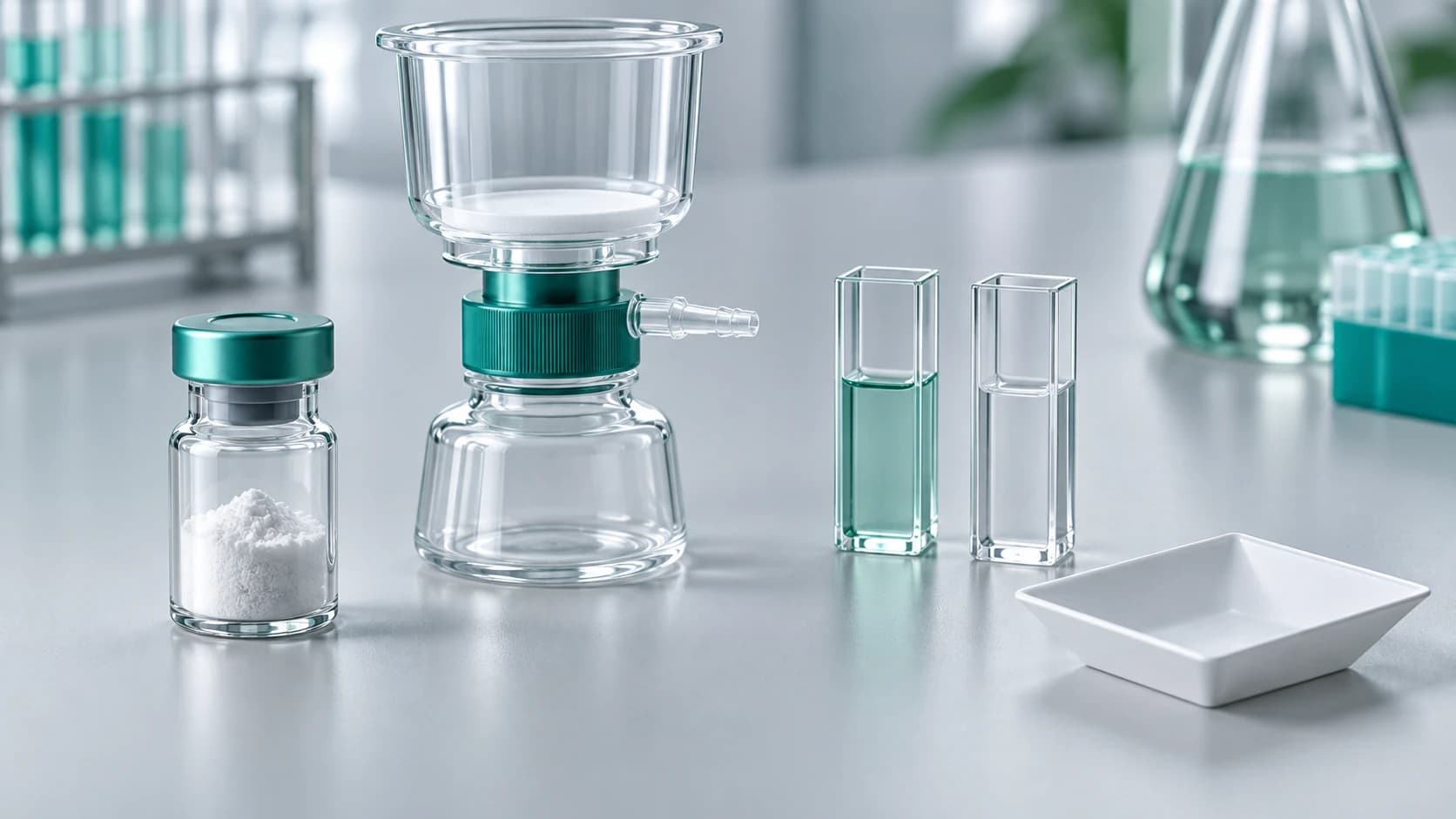
As noted in recent peptide science investigations regarding stability and mass balance (such as the analysis published at Peprecon Retatrutide Stability Research), standard analytical protocols often involve sample filtration steps before the solution is injected into the column. While these filters are designed to protect delicate instruments by removing particulates, they can inadvertently introduce significant analytical blind spots.
Swipe or scroll to compare all columns.
| Analytical Metric | What It Measures | Potential Blind Spot |
|---|---|---|
| HPLC Purity (%) | The ratio of the target peak relative to other soluble peaks detected in the solution. | Ignores insoluble aggregates or degraded fragments that were filtered out prior to reaching the column. |
| Recovery Rate (%) | The actual mass or concentration of peptide recovered relative to the theoretical dry weight or expected formulation. | Can drop significantly due to vial adsorption, precipitation, or aggregation without altering the purity percentage of the remaining soluble fraction. |
As highlighted in community discussions, "Purity numbers can be misleading because degraded/aggregated peptide may be filtered out before testing." If stress factors—such as temperature fluctuations, reconstitution friction, or storage duration—cause Retatrutide molecules to clump into larger aggregates or bind to container walls, these structures may be physically removed by syringe filters during sample preparation. The remaining soluble peptide passes through and registers an exceptional purity score, masking the fact that a notable percentage of the total active substance has actually been lost or structurally altered.
Why Filtration and Sample Prep Matter in Research
For clinical buyers, researchers, and wholesale distributors, this phenomenon reframes how Certificate of Analysis (COA) documents should be interpreted. A high purity percentage confirms the integrity of the soluble fraction that successfully traverses the column, but it does not automatically verify mass balance or long-term structural stability under suboptimal storage conditions.
When evaluating freeze-dried peptide vials, several compounding variables influence total recovery:
- Aggregation Tendencies: Larger peptide chains can undergo self-association or hydrophobic aggregation when exposed to improper freeze-drying cycles or reconstituting environments.
- Filter Adsorption: Certain membrane materials can retain peptide molecules, artificially lowering the concentration of the final test solution.
- Degradation Pathways: Breakdown products that are insoluble will precipitate out of solution and be trapped during pre-filtration, disappearing from the chromatogram entirely.
Understanding these mechanics ensures that procurement teams look beyond simple percentage figures and demand comprehensive testing standards that account for total content uniformity and mass balance verification.
Sourcing Verified Retatrutide with Complete Transparency
Navigating the complexities of peptide stability requires working with manufacturers who prioritize rigorous analytical transparency, batch-to-batch consistency, and uncompromised cold-chain logistics. At Evorpep, we ensure that every production run meets stringent international standards, providing clear documentation to support professional research and wholesale distribution.
- Explore our core manufacturing standards and specifications on the Evorpep Retatrutide Product Page.
- Review our broader analytical framework and technical literature at the Evorpep Research Hub.
- Verify specific batch reports and analytical documentation directly through our Evorpep COA Verification Portal.
- Ready to discuss wholesale catalog availability or customized batch requirements for your clinic or distribution network? Submit your inquiry via our Evorpep Request Quote Portal.